
January 17, 2024
Simplifying project sequencing for faster and safer EV battery plant construction
With electric vehicles (EVs) expected to reach between 40% and 50% of U.S. automobile sales by 2030, the surrounding infrastructure is being built at a rapid pace to support this growing demand.1 2 This includes numerous production facilities to manufacture the batteries that power EVs. These plants, which are rapidly springing up across America, have unique requirements for the original equipment manufacturers (OEMs), joint ventures and independent operators that build them.
Typical EV battery production facilities consist of large industrial buildings housing areas for raw material storage, wet processing, production, assembly and distribution. Several of these areas are cleanroom-level environments that require high filtration, very low humidity and specialized flooring to dissipate electrostatic charges. In addition, the facilities must be fireproofed, since they house extremely flammable and explosive materials. These requirements make the overall construction of an EV battery plant significantly more complex than building a typical automotive plant. Adding to the challenge, market demands are creating substantial pressure to build these enormous buildings faster.
Fortunately for facility owners, notable efficiencies can be achieved in the early stages of construction to make the entire process less cumbersome. Of particular interest is a major adjustment in project sequencing that results from moving the traditional fireproofing process from within the construction site to an off-site coatings shop. Doing it this way can greatly simplify the construction schedule, keeping typical on-site disruptions for fireproofing to a minimum and accelerating the completion of fireproofing. This simpler approach is a catalyst for safer, faster and better outcomes in EV battery plant construction. As an added benefit, it also offers significant potential cost savings of between $900,000 and $4.4 million for a typical facility, depending on the traditional on-site fireproofing method it replaces. Let’s review how.
Simpler Battery Plant Construction Project Sequencing
To demonstrate the benefits of shop-applied fireproofing, we will use the example of a new one-million-square-foot EV battery plant under construction that requires 100 000 square feet of structural steel surface to be fireproofed. When and where fireproofing takes place will be a key factor in simplifying processes and, therefore, enabling the project to be completed in a safer, faster and better way.
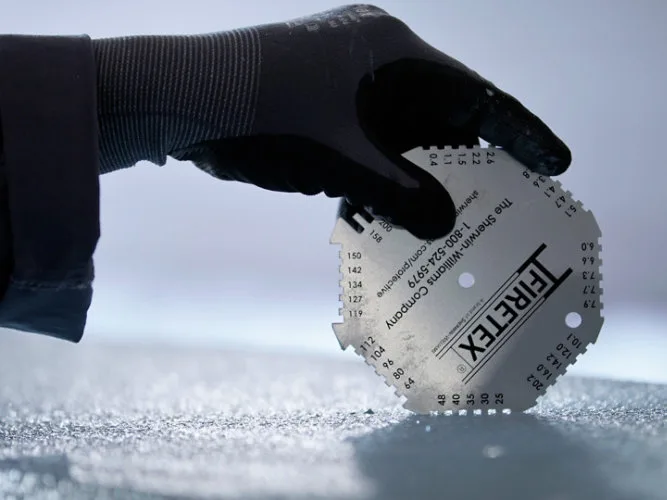
The type of intumescent material used is also important, since applying intumescent fire-resistive materials (IFRMs) is much simpler than applying traditional cementitious coatings and subsequently cleaning up the excess material. Also known as sprayed fire-resistive materials (SFRMs), cementitious intumescent coatings are sprayed onto structural steel surfaces like wet cement, which then cures and adheres to the steel. The process is almost always performed on site and is messy, as excess cement hits areas that should not be coated and clumps of excess material fall to the floor. IFRMs, which are typically thin-film epoxy coatings, are less messy to apply, whether on site or at an off-site facility. Applicators must spray a sufficient film of liquid epoxy onto the steel surfaces, perhaps making several passes to reach the thickness required for the building’s specified fire protection rating (Figure 1).
There are dramatic differences in project sequencing between fireproofing methods, and off-site IFRM applications greatly reduce the number of constraints on other trades working on the construction site compared with when applicators use IFRMs or SFRMs on site.
Field-Applied IFRMs or SFRMs
In traditional construction projects, fireproofing materials are typically applied on site despite the inherent inefficiencies. Some applications may be performed in a makeshift, semi-controlled tent before the steel is erected, but most likely the steel will be erected when it arrives at the construction site, and applicators will then fireproof it after it has been bolted into place. In either scenario, fireproofing activities create project sequencing challenges that result in multiple stops and starts for various trades. When applicators are spraying IFRMs or SFRMs, other trades cannot work in that area, since the dust and debris stirred up could affect the adhesion of the intumescent coatings. In addition, other workers would be exposed to the possibility of being struck by excess fireproofing material while applicators coat the steel.
During each of those fireproofing delays, applicators will need to install containment tarps and enclose the areas to be coated. These enclosures prevent debris from surface preparation activities and overspray from intumescent applications from infiltrating other areas of the construction site. This protection also allows other trades to keep working in other areas of the structure. But it takes precious time to cordon off large areas, complete surface preparation and coat the steel, time during which other activities likely will not take place in those areas. In addition, the enclosed areas may need to be conditioned to bring temperature and relative humidity to levels suitable for the sprayed material to adhere and cure. These requirements add time, cost and complexity to the job.
Shop-Applied IFRMs
Managing the intumescent fireproofing process using IFRMs in a shop environment simplifies project scheduling. Applications can be completed before any steel erection takes place on the jobsite, or even during the erection process, with deliveries of intumescent-coated steel scheduled to align with the current progress of the project. Performing fireproofing applications off site and before the steel is erected greatly reduces the common constraints associated with on-site coating applications. Various other trades, including electricians, plumbers, concrete installers and others, can freely go about their business during the steel erection phase without the frequent need to coordinate with coatings applicators and stop work during on-site fireproofing activities.
There is only a brief period of constraint in this scenario, covering the time during which on-site applicators will need to complete the final IFRM applications on the erected steel. In the shop, applicators will cover approximately 80% of the building’s entire structural steel surface. The remaining 20% represents “holdback” areas that will need to be fireproofed after the steel is bolted together (Figure 2). These areas will receive a coat of primer to prevent the steel from rusting, but will be left free of IFRM, since intumescent coatings must not be applied between fastened pieces of metal, as they are designed to swell in the event of a fire. On site, applicators will need to apply IFRM to each holdback area at the same thickness that was applied in the shop, perhaps installing small containment structures around the areas and preparing the steel surface as needed. They can perform this final touch-up-level activity somewhat strategically within the project sequencing schedule to minimize the number of trades affected in a given area.
With nearly all of the process constraints eliminated by applying IFRMs in the shop, scheduling becomes simpler on the construction site. In addition, the process eliminates the need for most, if not all, tarps, as well as the use of heating and/or dehumidification equipment. On-site traffic, logistics and storage are also simplified, since fully coated steel pieces can be pulled directly from delivery trucks and quickly installed in the structure (Figure 3). In addition, cleanup is much easier, since there is no SFRM-related mess to remove.
Faster Project Completions
The streamlined nature of applying IFRMs in a shop environment enables greater efficiencies compared with applying IFRMs or SFRMs on the construction site.
Within the controlled coatings application shop environment, IFRM applications can be performed much faster than on the construction site. A shop is essentially a factory, purpose-built to move uncoated steel through various processes to deliver a consistent, quality finish that meets specifications. Every task is choreographed and optimized for throughput. On the jobsite, it is difficult to achieve uniform application. Construction delays, weather conditions, the work of other trades and additional obstacles threaten efficiency. And, as established earlier, other workers will need to clear the area where on-site IFRM or SFRM applications are taking place, which will slow construction progress.
The disruptions and delays for other trades noted in the discussion on project sequencing hold true regardless of whether workers are applying IFRMs or SFRMs. However, IFRMs offer significant time savings, since the example facility’s entire 100,000-square-foot steel surface can be fireproofed in half the time when IFRMs are sprayed in a shop and touch-ups are completed on site (45 days) compared with applying SFRMs on site (90 days). Alternatively, applications can be completed 30 days sooner when IFRMs are sprayed on site (60 days) compared with applying SFRMs on site (see Table 1 below). By completing coating applications sooner, entire buildings can be finished faster, since any trade that depends on fireproofing completion can begin its tasks earlier.
Finally, IFRMs enable faster installation of various items that may be attached to fireproofed structural steel, such as ductwork, plumbing and electrical fixtures. During the installation of such items, fireproofing materials are often damaged and need to be touched up to ensure their protection. It is much easier and faster to prepare and apply a small amount of an IFRM to those areas compared with an SFRM.
Safer Coating Applications
The very nature of intumescent coatings is safety. The coatings are designed to slow the transfer of heat from a fire to structural steel so that the steel can maintain its structural integrity for a specific period of time. That protection gives building occupants time to evacuate and first responders time to potentially save large sections of the building, or even the entire structure, from collapse. With SFRMs, the cementitious material blocks heat transfer. For IFRMs, the thin coatings react chemically in a fire and swell to approximately 50 times their dry film thickness (DFT), and that char acts as insulation to reduce the rate of heat transfer.
Safety can also be a priority when applying fireproofing coatings. Applying IFRMs at ground level in a shop is much safer than completing IFRM or SFRM applications from ladders, scaffolding and lifts while a building is under construction. Every worker is firmly planted on solid ground inside the shop (Figure 4). Of course, on-site applicators will still need to perform some elevated work to finish the off-site-coated steel after it is erected. But the majority of coating applications will be performed from the ground for a safer overall coating experience.
Moving the coating process from the construction site to a shop also minimizes instances in which coatings applicators need to work around other trades on site and encounter hazardous equipment. Reducing those potential encounters helps increase safety for all workers on site, not just applicators.
Application shops are also strictly regulated for health, safety and environmental (HSE) considerations. That includes proper ventilation and filtration to contain the release of volatile organic compound (VOC) emissions during spraying and while the coatings cure. On jobsites, these emissions are impossible to contain.
In addition, applying IFRMs in a controlled shop environment enables better quality control to ensure accurate coating thicknesses on every piece of steel. This is an important safety implication, because each steel section must have a specific coating thickness to meet the specified fire protection requirements. If IFRMs are applied too thin, they may not block heat transfer long enough. If they are applied too thick, the coatings could fall off due to the weight of the char. Working from the ground, applicators can take multiple wet and dry film thickness measurements across a piece of steel more easily than when working from a ladder, ensuring that the proper thickness is applied (Figure 5).
Lastly, it is important to note that SFRMs may not be compatible with EV battery plant production environments. Cementitious materials are porous and, therefore, can allow corrosive vapors from battery manufacturing operations to penetrate through them and reach the unprotected steel underneath, promoting corrosion. In addition, cementitious SFRMs are prone to flaking, cracking and detaching from the steel substrate, especially in a dehumidified, cleanroom-like environment that deprives cementitious materials of moisture. Therefore, areas that lose full SFRM coverage will have less fire protection and potentially no longer meet the building’s specified fire protection rating. In addition, any falling debris represents an elevated hazard that could strike a worker and cause injury. Worse yet, even a small piece of cement falling into a lithium-containing raw material mixing vat could create an extremely dangerous environment due to the chemical reactions that would follow.
Lower Costs and Better Outcomes
Most buildings constructed in the U.S. use cementitious SFRM fireproofing technology based on tradition and the belief that it is the least expensive solution. This may be true when comparing on-site SFRM and IFRM applications, which could cost about $6.5 million and $10 million, respectively, to fireproof 100,000 square feet of steel surface (see Table 1). However, significant cost savings can be achieved by moving the majority (about 80%) of coating applications into the shop, with costs totaling only $5.6 million to coat the same steel. Therefore, the total savings for off-site IFRM applications range from approximately $900,000 to $4.4 million. Notably, actual cost savings could be even greater, since these comparisons use the lowest estimated cost per square foot for on-site SFRM applications and the highest estimated costs for both on-site and off-site IFRM application methods.
The cost savings come from several areas. For example, applying coatings in a shop environment greatly reduces or eliminates the requirements for tarps, lifts and heating units on site. Applicators can move faster with significantly reduced labor costs, since only three applicators are needed for 45 days in the shop compared with the six to eight crew members needed for 60 to 90 days to apply fireproofing on site. The construction site will not require a separate area for storing and mixing coating materials. In addition, the project sequencing advantages offered by shop applications enable a wealth of efficiencies on the construction site for a variety of trades.
Beyond cost savings and efficiency, the process of intumescent fireproofing of steel in a shop using IFRMs improves safety by removing hazardous tasks from the jobsite and moving them to a controlled, safe environment. Applicators can also better manage quality to enhance aesthetics and fireproofing performance. Ultimately, all of the benefits offered by the shop-applied IFRM approach help building owners achieve better overall project outcomes.
Table 1. Sample Fireproofing Bids.
Comparing application costs for fireproofing 100,000 square feet of total steel surface reveals significant savings when moving coating activities off site to a shop environment. This is true even when using the minimum cost for on-site-applied SFRMs and the highest costs for IFRMs applied on site or off site, as shown below:
- On-site-applied IFRMs: $100/ft2 x 100,000 ft2 = $10 million
- On-site-applied SFRMs: $65/ft2 x 100,000 ft2 = $6.5 million
- Shop-applied IFRMs: (Shop: $45/ft2 x 80,000 ft2) + (On site: $100/ft2 x 20,000 ft2) = $5.6 million (*Approximately 20% of intumescent coating applications will need to be performed on site after the steel is erected, accounting for the two different costs.)
| Field-applied SFRMs | Field-applied IFRMs | Field-applied SFRMs | Shop-applied IFRMs |
| Product | Coating price | Coating price | Coating price |
| Labor | 6 workers | 8 workers | 3 workers |
| Duration | 60 days | 90 days | 45 days |
| Schedule (Days x Hours) | 6 x 10 | 6 x 10 | 6 x 10 |
| Tarp enclosure | Yes | Yes | N/A |
| Lifts | 2 units | 3 units | N/A |
| Heating units | 4 | 4 | N/A |
| Mixing and storage area | Yes | Yes | N/A |
| Cleanup | Yes | Yes | N/A |
| Total estimate per square foot | $90-$100 | $65-$80 | $25-$45 (*80% of coatings) |
| Total estimate per square foot for on-site holdbacks and touch-ups | N/A | N/A | $90-$100 (*20% of coatings) |
| Total costs | $10 million | $6.5 million | $5.6 million |
References
- Brinley, Stephanie. “EV Chargers: How Many Do We Need?” S&P Global Mobility, 9 Jan. 2023, https://www.spglobal.com/mobility/en/research-analysis/ev-chargers-how-many-do-we-need.html. ↩︎
- KPMG International. “22nd Annual Global Automotive Executive Survey 2021: Industry Leaders Foresee Dramatic Changes.” KPMG International, Nov. 2011, https://assets.kpmg.com/content/dam/kpmg/xx/pdf/2021/11/global-automotive-executive-summary-2021.pdf. ↩︎
ABOUT THE AUTHORS
Joseph Windover is a construction executive with Sherwin-Williams Construction Solutions. He joined Sherwin-Williams in 2016 and is currently responsible for helping general contractors build safer, faster and simpler facilities for semiconductor and EV battery cell production. Since 2019, he has contributed his industry expertise to help with the construction of 13 EV battery factories. Windover is a committee member of the Charles Pankow Foundation, where he helps develop innovations in modular steel flooring for high-rise building construction. He is a published contributor to the Institute for Construction Innovation and spoke at the Advancing Integrated Project Delivery Summit in 2022.
Jacob Allard is a construction executive with Sherwin-Williams Construction Solutions. He has worked at Sherwin-Williams since 2008 and currently helps automakers build safer, faster and simpler EV battery cell plants. He has also contributed his industry expertise to help with the construction of 13 EV battery factories since 2019. Allard has served as president of the Ohio and Indiana chapters of NACE International, now AMPP, since 2018. He also spoke at the Advancing Integrated Project Delivery Summit in 2022 to share insights on EV plant construction with other industry leaders.